- HOME
- Inverters
Inverters
Function, Architecture, and Selection Criteria for Residential Solar Systems
A. What is an Inverter?
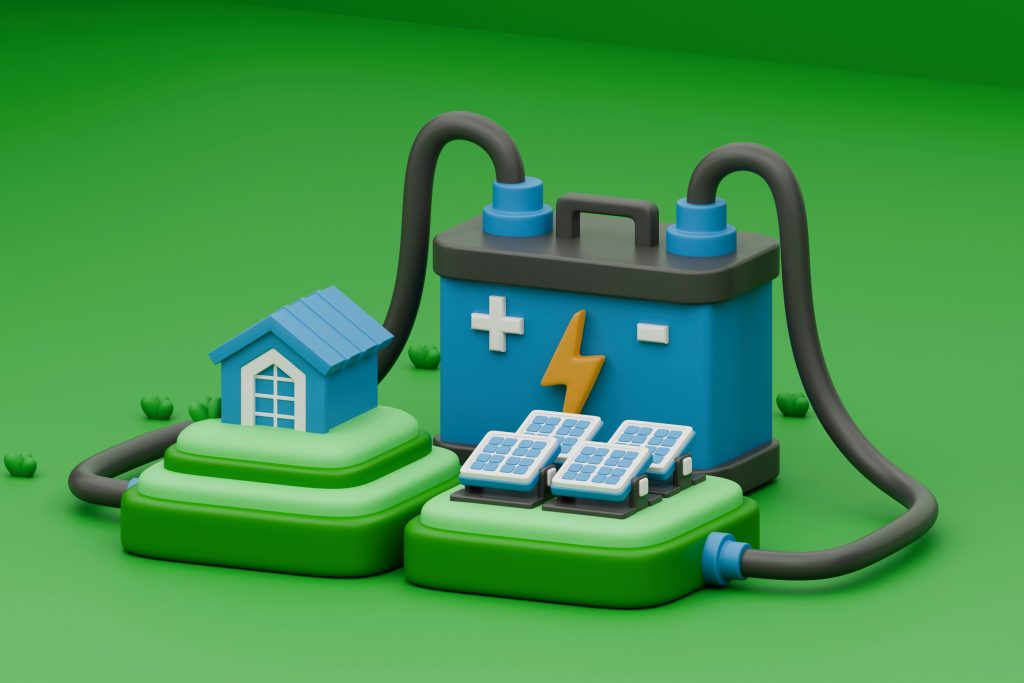
An inverter converts the direct current electricity produced by solar panels into the alternating current used by residential electrical systems and the utility grid. It is the primary power conversion component in a solar installation.
In addition to electrical conversion, modern residential inverters perform several secondary functions: real-time production monitoring, grid communication and safety disconnection, maximum power point tracking to optimize panel output under variable conditions, and — in systems with battery storage — management of charge and discharge cycles.
The inverter is the component most likely to require replacement or service within a system’s 25-year lifespan. Panel warranties typically run 25 years. Standard string inverter warranties run 10–12 years, with extended warranty options available. Microinverter manufacturers generally warrant their products for 25 years.
B. How An Inverter Works in a Residential System
Solar panels produce DC electricity at a voltage that varies with sunlight intensity and temperature. The inverter accepts that variable DC input and converts it to AC electricity at the voltage and frequency required by the home’s electrical panel — typically 240V at 60Hz in U.S. residential applications.
In a net metering configuration, the inverter also manages the interface between the home’s electrical system and the utility grid. When the system produces more electricity than the home is consuming, the inverter directs excess production onto the grid. When consumption exceeds production, the inverter allows grid electricity to supplement solar generation. This transition happens continuously and automatically.
The manner in which panels connect to the inverter — the inverter architecture — determines how the system responds to shading, panel mismatch, and individual panel failures. This is often the most consequential technical decision in residential solar system design, particularly on roofs with partial shading or multiple orientations. These specifications are handled extremely routinely and similarly across installers.

C. Inverter Architecture: The Three Common Configurations String Inverters
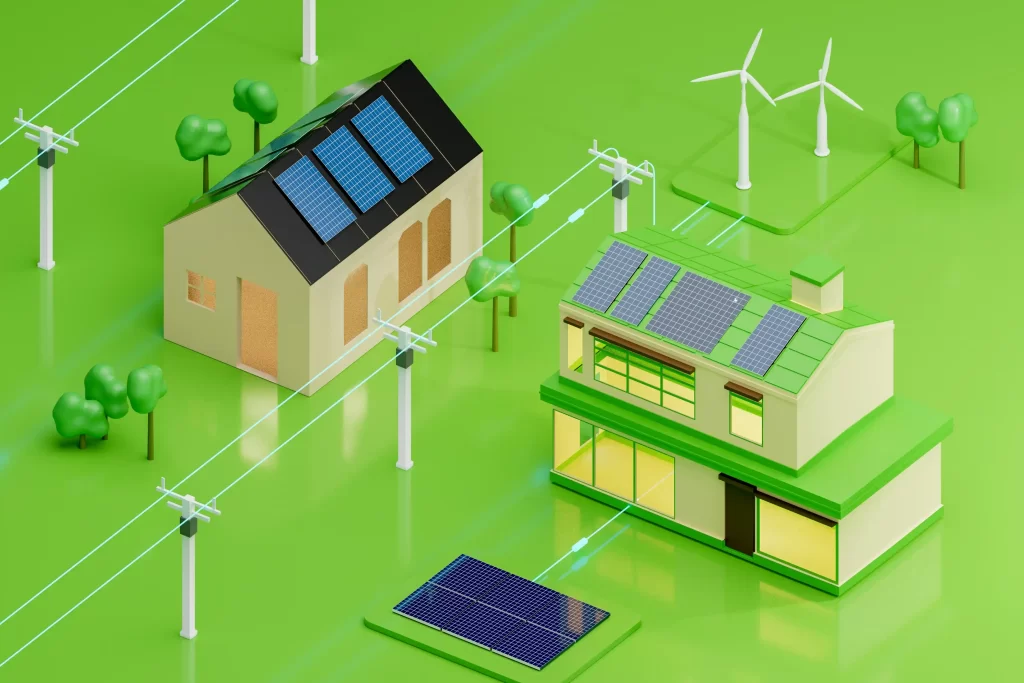
In a string inverter configuration, panels are wired in series — a “string” — with the combined DC output fed to a single central inverter. String inverters are the most common configuration in residential installations and carry the lowest equipment cost of the three architectures.
The primary technical limitation of string inverter design is that production across the entire string is constrained by the lowest-performing panel in that string. A panel that is partially shaded, oriented differently from others, or experiencing reduced output due to soiling or manufacturing variation will reduce the output of every panel connected to it in the same string.
String inverters are well-suited for roofs with uniform orientation, minimal shading, and consistent panel conditions. In those installations, they perform reliably and cost-effectively.
Typical specifications:
Efficiency: 96–98% conversion efficiency Warranty: 10–12 years standard; extended warranties available to 20–25 years Monitoring: System-level production data standard; panel-level data not available without additional hardware Cost: Lowest equipment cost of the three architectures
Common manufacturers in the U.S. residential market: SMA, Fronius, SolarEdge (in string-only configurations), Enphase (not applicable — microinverter architecture), Growatt, Huawei.
String Inverters with Power Optimizers
Power optimizers are module-level power electronics — small devices mounted beneath each panel that perform maximum power point tracking at the individual panel level before the DC electricity is sent to a central string inverter. This configuration addresses the primary limitation of standard string inverter design by allowing each panel to operate independently of others in the string.
The practical effect: shading or reduced output on one panel does not constrain the output of adjacent panels. Each panel performs at its individual maximum regardless of what neighboring panels are doing.
SolarEdge is the dominant manufacturer of this configuration in the U.S. residential market. The system consists of SolarEdge HD-Wave string inverters paired with SolarEdge power optimizers on each panel. This combination accounts for a significant share of Maryland residential installations.
Typical specifications:
Optimizer efficiency: 99.5% System conversion efficiency: 97–99% combined Warranty: Inverter 12 years standard; optimizers 25 years Monitoring: Panel-level production data available through manufacturer platform Cost: Moderate — higher than string-only, lower than full microinverter systems
Microinverters
In a microinverter configuration, each panel is paired with its own dedicated inverter mounted on the racking beneath it. DC-to-AC conversion occurs at the panel level rather than centrally. The electrical output of the system is AC from the point of generation.
This architecture provides complete module-level independence — shading, soiling, or reduced output on any individual panel has no effect on the production of other panels. It also eliminates the single point of failure present in string inverter systems: if one microinverter fails, the remaining panels continue operating normally.
Enphase Energy is the dominant microinverter manufacturer in the U.S. residential market. The IQ8 series, current as of 2025, includes a sunlight backup feature that allows limited operation during grid outages without battery storage in certain configurations.
Typical specifications:
Conversion efficiency: 97–97.5% per unit Warranty: 25 years standard Monitoring: Panel-level production data standard Cost: Highest equipment cost of the three architectures
String vs Microinverter: How They Compare
String inverters and microinverters perform the same fundamental function: converting DC electricity from solar panels into usable AC electricity for the home and grid. The difference lies in where and how that conversion occurs.
In a string inverter system, multiple panels are wired together and connected to a single central inverter. In a microinverter system, each panel has its own inverter mounted beneath it.
From a performance standpoint:
- On unshaded, uniform roofs, both architectures typically produce within a narrow range of each other.
- On roofs with partial shading, multiple orientations, or panel mismatch, microinverters or optimizer-based systems generally maintain higher overall production by isolating panel-level performance.
From a reliability standpoint:
- A string inverter represents a single point of failure. If it fails, the entire system goes offline until serviced.
- A microinverter failure affects only the panel it serves. The rest of the system continues operating.
From a warranty standpoint:
- String inverters are typically warranted for 10–12 years, with extended coverage available.
- Microinverters commonly carry 25-year warranties aligned with panel warranties.
From a cost standpoint:
- String inverter systems are generally the lowest equipment-cost configuration.
- Microinverter systems typically carry the highest upfront equipment cost.
- Optimizer-based systems fall between the two.
The practical decision is rarely about which architecture is “better” in isolation. It is about how the roof geometry, shading conditions, and long-term service expectations align with the architecture’s characteristics.
In Maryland residential installations with complex rooflines or moderate tree shading, module-level electronics often provide measurable production stability. On simple, unshaded roofs, a properly sized string inverter performs reliably and cost-effectively.
What Is the Difference Between SolarEdge and Enphase?
SolarEdge and Enphase represent the two dominant module-level architectures in the U.S. residential solar market.
SolarEdge uses a string inverter paired with power optimizers mounted at each panel. Enphase uses a microinverter mounted at each panel, eliminating the need for a central string inverter.
The structural difference:
- SolarEdge performs DC optimization at the panel level and AC conversion centrally.
- Enphase performs both DC optimization and AC conversion at the panel level.
In practical residential applications, both architectures:
- Provide panel-level monitoring.
- Mitigate shading losses more effectively than standard string-only systems.
- Integrate with battery storage ecosystems designed around their platforms.
Key distinctions:
Battery integration
Enphase batteries integrate natively with Enphase microinverters. SolarEdge offers its own battery system integrated with its inverter platform. Both ecosystems are mature, but cross-compatibility with third-party batteries varies.
Single point of failure
SolarEdge retains a central inverter component. If that inverter fails, system production pauses until replacement. In Enphase systems, inverter functionality is distributed — individual microinverter failures affect only a single panel.
Electrical topology
SolarEdge systems maintain high-voltage DC runs from roof to inverter. Enphase systems convert to AC at the panel level, resulting in AC trunk wiring across the roof.
Cost
SolarEdge systems are typically priced below microinverter systems at similar system sizes, though pricing varies by installer and project complexity.
Performance
Under most Maryland residential conditions, both systems perform within a comparable production range when appropriately designed. Differences in long-term output are more strongly influenced by shading, layout, and modeling assumptions than by architecture brand selection alone.
For homeowners evaluating a proposal, the relevant question is not which brand is superior in the abstract. It is whether the proposed architecture aligns with the roof’s shading profile, long-term service expectations, and any anticipated battery integration.
D. Where Meaningful Differences Exist Shading response
The most material performance difference between architectures is how each handles partial shading. On a roof with no shading, a well-designed string inverter system and a microinverter system will perform within a narrow range of each other. On a roof with partial shading from trees, dormers, or neighboring structures — conditions common across Maryland’s suburban and rural housing stock — module-level electronics (power optimizers or microinverters) will typically produce measurably more electricity than a standard string inverter by preventing production losses from propagating across a string.
The degree to which this difference is material depends on the specific shading conditions. A shading analysis using production modeling software is the appropriate tool for quantifying the expected impact on a given roof.
Single point of failure
Battery integration
Inverter architecture affects battery integration. Some battery systems are designed to work with specific inverter platforms. Enphase batteries integrate natively with Enphase microinverters. SolarEdge has its own battery ecosystem. Some third-party batteries are compatible with multiple inverter platforms. This compatibility question is most relevant for homeowners who anticipate adding storage after initial installation.
Monitoring granularity
String inverters without optimizers provide system-level production data only. Panel-level monitoring — which allows identification of underperforming panels — requires either power optimizers or microinverters. For homeowners who want to verify that individual panels are performing as projected, module-level monitoring is the relevant specification.
Warranty horizon alignment
Panel warranties run 25 years. A string inverter warranted for 10–12 years will require replacement or extended warranty coverage before the panels reach end of warranty. Microinverter warranties at 25 years align with the panel warranty horizon without a planned replacement cycle.

E. Where Differences Are Often Overstated
Conversion efficiency differences between architectures, in residential applications, are typically marginal. The gap between a 97% efficient microinverter and a 98% efficient string inverter translates to a small fraction of total system output annually — not a material driver of system economics.
Brand differentiation within architecture categories is similarly incremental for mainstream manufacturers. SMA and Fronius string inverters, for example, operate within a comparable performance range for most residential applications. The choice between them is unlikely to produce a measurable difference in long-term production.
Monitoring platform features — dashboard design, app interface, alert configurations — are frequently emphasized in sales presentations. These features affect the homeowner’s visibility into system performance but do not affect the system’s electricity production.
What to Look At
What Often Gets Overemphasized
Fractional efficiency differences between architectures in unshaded or minimally shaded applications.
Monitoring platform aesthetics and interface design relative to underlying production performance.
Brand prestige within a given architecture category where mainstream manufacturers perform comparably.
Upgrade features that are not relevant to the specific installation — grid export controls, advanced grid services functions, or commercial-grade capabilities offered in residential equipment.
In Most Maryland Residential Systems
Inverter architecture selection is most consequential on roofs with partial shading or complex geometry. For unshaded, simple roofs, a well-sized string inverter from an established manufacturer performs reliably and cost-effectively. For roofs with shading from trees, dormers, or multiple orientations, module-level electronics — whether power optimizers or microinverters — typically provide a measurable production advantage that warrants the additional equipment cost.
Overall project economics are influenced more heavily by total system size, roof orientation, shading profile, utility rate structure, and financing model than by inverter brand selection within a given architecture category.
Inverter selection should be evaluated within the context of the full system design.
→ See also: System Design — Performance Modeling — Panels — Batteries