Maryland Solar

 The Big Picture

Why Solar Adoption in Maryland Is Accelerating — and What That Means for Your Home

Solar panels have been appearing on Maryland rooftops for two decades. For most of that time, adoption was driven primarily by homeowners who were motivated by environmental values, attracted to the novelty of the technology, or willing to run a long-term financial projection and bet on future rate increases.

That profile has changed.

The homeowners evaluating solar in Maryland today are largely doing so because of what is already happening — not what might happen. Electricity bills that have doubled in four years. Grid stress that is visible in PJM capacity prices and utility rate case filings. A state policy environment that has made solar more financially accessible than at any point in Maryland’s history. And a federal incentive structure that has meaningfully improved the economics of ownership.

This page explains the broad forces behind that shift. The sections that follow go deeper on each one.
The Rate Environment

The most immediate driver of solar adoption in Maryland right now is the cost of not having solar.

Average residential electricity rates across the state have roughly doubled since 2021. A BGE customer who was paying approximately 12¢ per kilowatt-hour four years ago is now paying 23–26¢. A Pepco customer in Montgomery County has seen their all-in rate climb from roughly 13¢ to 23–25¢. Even Potomac Edison — which spent decades as the lowest-rate utility in Maryland, largely insulated from the delivery charge escalation affecting Exelon-affiliated utilities — has seen its supply rate increase nearly 50% since 2021.

Those increases are not primarily the result of policy decisions that could easily be reversed. They reflect structural changes in the regional electricity market: a 2024 PJM capacity auction that cleared at roughly five times the prior year’s price, natural gas procurement cycles that locked in elevated costs during the volatile 2021–2023 period, and sustained demand growth from data center construction, electrification of homes and vehicles, and population expansion in the DMV corridor.

The supply and demand imbalance that is driving these costs is not resolving quickly. New large-scale generation takes years to permit, finance, and build. Transmission infrastructure operates near capacity in key corridors. Demand projections are being revised upward, not downward. The rate environment that exists today is the product of forces that are still in motion.

For homeowners, that context reframes what solar represents. It is not primarily a bet on future rate increases — those increases have already arrived. It is a mechanism for locking in a known cost of electricity production before the next cycle of increases lands.

The Grid

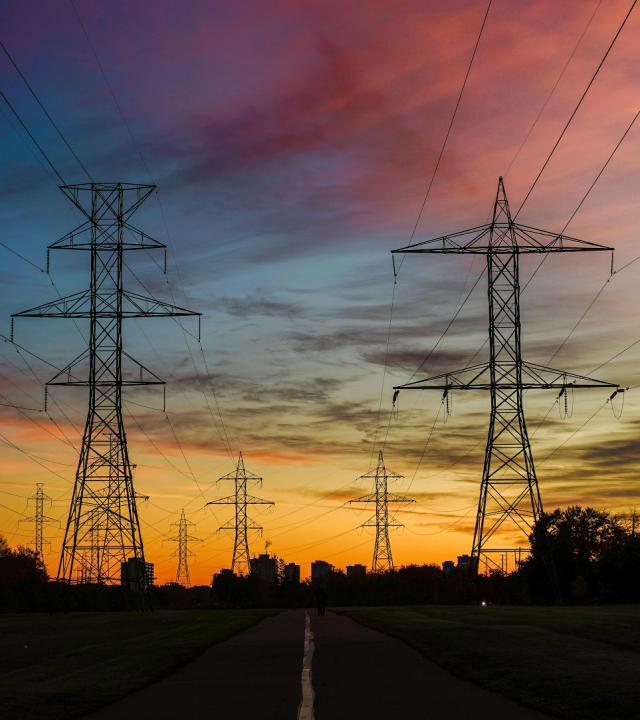
Maryland’s electricity grid is under more stress than it has been at any point in recent history. Understanding why illuminates why distributed solar — power generated at the point of consumption rather than transported from a distant plant — has become increasingly valuable to the system as a whole.

Demand is growing faster than supply is being added. The data center buildout across Northern Virginia and extending into Maryland represents one of the most significant sustained load additions in the region’s history. A single large AI-oriented data center can consume as much electricity annually as tens of thousands of homes. Multiple facilities of that scale are under construction or in development across the Mid-Atlantic simultaneously, and more are in the pipeline.

At the same time, older coal and oil-fired generation plants have been retired. Building replacement capacity — whether natural gas, nuclear, or renewable — requires years of permitting, financing, and construction. The gap between what is being demanded and what is available to serve that demand is reflected directly in PJM’s capacity auction prices, which utilities pass through to customers.

When a homeowner generates power on their own roof, they reduce the load they place on that stressed system during the hours when the sun is shining. For the grid, distributed solar is a form of demand reduction. For the homeowner, it is a form of cost insulation. For Maryland’s ability to meet its clean energy goals, it contributes directly toward the renewable generation capacity the state needs.

The grid stress that is driving rate increases is, in other words, the same condition that makes solar more valuable.

The Policy Environment

Maryland has built one of the more favorable state-level policy environments for residential solar in the country. That did not happen by accident — it is the product of deliberate policy choices designed to accelerate solar adoption in support of the state’s 100% clean energy by 2035 commitment.

The cornerstones of that environment are:

Net metering at the full retail rate, which allows homeowners to bank credits for excess solar generation and apply them against future consumption — effectively using the grid as free storage and making system sizing far more practical.

Solar Renewable Energy Certificates, which allow homeowners to earn additional income from the clean electricity their systems produce. Utilities must purchase SRECs to comply with the state’s Renewable Portfolio Standard. Each megawatt-hour of solar production generates a certificate with real market value, separate from and in addition to the bill savings from net metering.

Read more

The Financial Case

When the rate environment and the incentive structure are evaluated together, the financial case for solar in Maryland is stronger today than at any prior point in the state’s history — for the right properties.

The key variables are electricity cost, system production, incentive capture, and financing structure.

Electricity cost is set by the utility and, as documented across this site, is currently elevated and subject to continued upward pressure. Higher baseline rates mean higher per-kilowatt-hour savings on every unit of solar production.

System production is determined by the property — roof orientation, tilt, shading, and available space. A south-facing roof with good sun exposure in Prince George’s County produces more annual electricity than a partially shaded north-facing roof in a heavily wooded area. Production modeling against actual site conditions is how this variable gets resolved for any given property.

Incentive capture is a function of which programs a homeowner qualifies for and how the system is financed. Cash purchases capture the full federal tax credit and maximize SREC income. Financed purchases share some of those economics with lenders but may still produce net positive cash flow from day one at current rates.

Financing structure — ownership versus PPA versus lease — determines how the economics are distributed between the homeowner and a third party. Each model has different implications for monthly cash flow, long-term return, and what happens at home sale. The Financial Structures section of this site covers those differences in detail.

The Environmental Dimension

Maryland has committed to 100% clean electricity by 2035. Residential solar is one of the most direct mechanisms available for achieving that goal, because it adds generation capacity at the distribution level without requiring new transmission infrastructure, permitting for large-scale projects, or long construction timelines.

Each residential system installed contributes to the state’s overall renewable capacity. At the aggregate level, distributed rooftop solar reduces the load that must be served by fossil fuel generation during peak daylight hours — reducing both emissions and the grid stress that drives capacity costs higher for everyone.

The environmental case and the financial case are not in tension in Maryland’s current policy environment. The SREC program, in particular, was specifically designed so that the environmental value of solar production carries a monetary value — one that is paid by utilities who would otherwise have to meet their renewable portfolio obligations through other, more expensive means. When a Maryland homeowner earns SREC income, they are being compensated for the environmental value their system creates, by the entities the state has obligated to produce it.

Home Value

Solar installations have a documented effect on residential property values in Maryland. A system that reduces a home’s ongoing electricity cost represents a quantifiable economic benefit that buyers recognize and that appraisers are increasingly equipped to value.

The relationship is not universal — the extent of the value increase depends on the size of the system, the rate environment in the territory, local market conditions, and how the system is structured. Owned systems transfer with the home and carry their full remaining economic value. Leased systems and PPAs involve third-party contracts that must be transferred to or assumed by the buyer, which introduces transaction complexity.

For owned systems in high-rate utility territories — BGE, Pepco, Delmarva — the value contribution is generally most pronounced, because the offset value of the system’s production is highest where electricity costs the most. For lower-rate territories, the value contribution exists but is proportionally smaller.

Not Every Property Qualifies

This is the dimension that distinguishes an honest analysis from a sales pitch.

Solar produces electricity from sunlight. A property that cannot access sufficient sunlight — because of roof orientation, tree canopy, neighboring structures, or roof geometry — cannot produce enough electricity to justify the installation cost. No financial incentive structure changes the underlying physics.

The variables that determine site viability are specific to each property:

Roof orientation and tilt affect how much solar energy the panels can capture across the course of a day and year. South-facing roofs at moderate pitch angles produce the most in Maryland. East and west-facing roofs produce less but can still be viable. North-facing roofs rarely pencil out.

Shading from trees, chimneys, dormers, and neighboring buildings reduces production in ways that are not always obvious from the ground. Shade analysis using actual irradiance modeling is the only reliable way to quantify the impact on a specific roof.

Read more