
- HOME
- Batteries
Battery Storage
Backup Power, Grid Interaction, and Economic Context in Maryland Residential Solar
What a Battery Actually Does
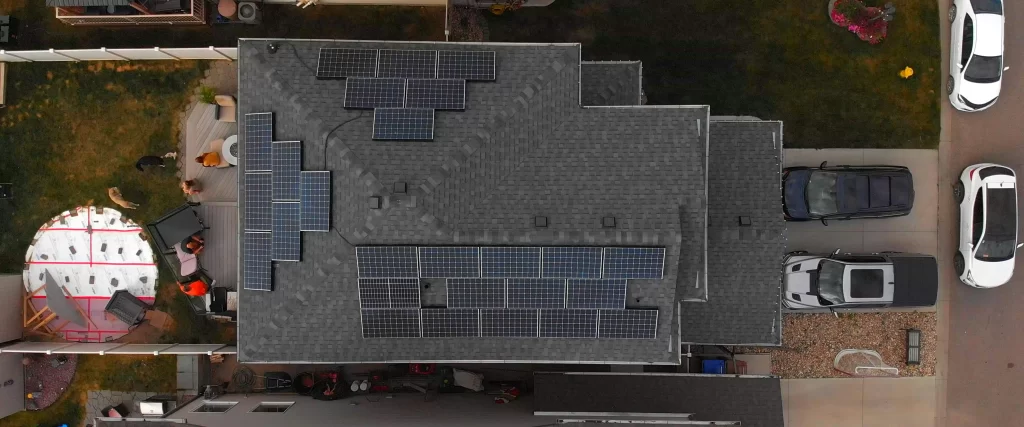
A residential battery stores excess electricity for later use.
In a standard grid-connected solar system without storage, excess daytime production flows onto the utility grid under net metering rules. The home earns a bill credit for that exported energy and draws grid electricity at night when the panels are not producing. The grid functions as the effective storage medium.
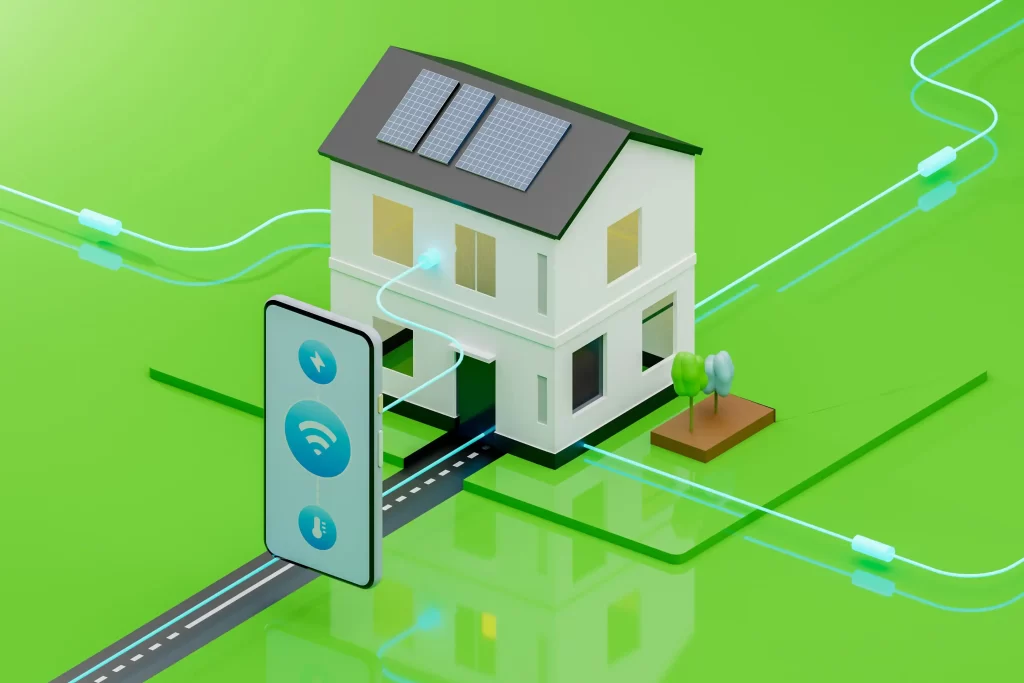
With a battery installed, excess production can instead be captured on-site and discharged later, powering the home after dark, during cloudy periods, or when the grid is unavailable. The battery does not eliminate the grid relationship for most homeowners. It modifies it.
In Maryland residential applications, the primary functional purpose of a battery today is backup power during grid outages. Understanding that framing clearly is the most useful starting point for evaluating whether battery storage belongs in a given project.
Backup Power Versus Energy Arbitrage
Residential batteries serve two distinct purposes, and the Maryland market currently favors one over the other by a significant margin.
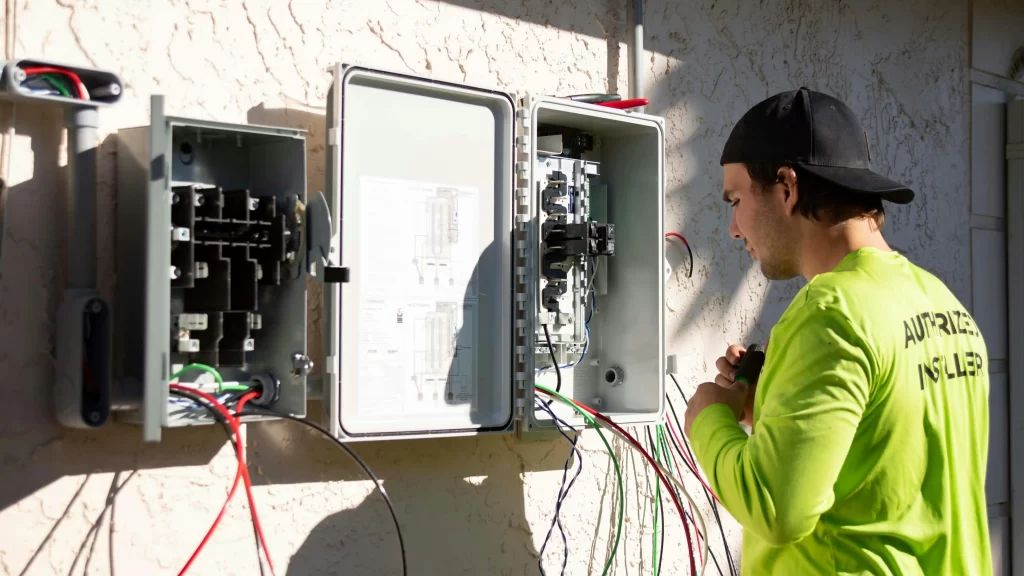
The first is backup power. Standard grid-tied solar systems shut off automatically when the utility grid loses power, a safety requirement designed to protect utility workers from energized lines. A battery system, paired with compatible inverter architecture, can isolate the home from the grid and continue powering designated circuits during an outage. Backup configurations range from whole-home coverage for smaller-load households to partial-load setups that prioritize critical circuits (refrigeration, medical equipment, lighting, outlets, etc…) while shedding higher-draw appliances. In Maryland, where outages are typically weather-related events measured in hours rather than prolonged infrastructure failures, battery systems are evaluated primarily on runtime expectations and reliability during those events.
The second use case is energy arbitrage, or storing electricity when rates are low and discharging during peak-rate periods to reduce the net cost of grid consumption. In utility territories with pronounced time-of-use rate structures, where peak rates may run two to three times the off-peak rate, this strategy can produce meaningful bill reduction. In most Maryland residential rate structures today, that spread is considerably narrower. The difference between peak and off-peak pricing across BGE, Pepco, and most other Maryland utilities is typically insufficient to justify battery economics on arbitrage alone, under current tariff designs.
For most Maryland homeowners, a battery is a resilience decision. The financial case for storage, where it exists, is built on backup value and future grid program participation rather than immediate bill reduction.
How Residential Battery Technology Works
Most residential batteries installed today use lithium iron phosphate chemistry, commonly abbreviated LFP. Earlier residential storage products used lithium nickel manganese cobalt formulations, but the market has shifted substantially toward LFP in recent years due to its improved thermal stability, longer cycle life, lower fire risk profile, and declining cost trajectory. For most homeowners evaluating residential storage in 2025, LFP is the prevalent technology across the major manufacturers.
Two efficiency concepts are relevant to understanding battery performance in practice.
Round-trip efficiency describes the percentage of electricity put into a battery that can be recovered when it is discharged. Typical residential systems operate at 85–92% round-trip efficiency depending on chemistry, operating conditions, and system design. This means some energy is lost in each charge-discharge cycle – a factor that belongs in any honest production and financial model.
The distinction between nameplate capacity and usable capacity is one of the more commonly misunderstood specifications in residential battery proposals. A battery rated at 13.5 kWh does not necessarily deliver 13.5 kWh of usable energy. Manufacturers reserve a portion of the battery’s total capacity to protect cell health and warranty performance, meaning the electricity actually available to the home is typically lower than the headline number. Proposals that present nameplate capacity figures without specifying usable capacity are presenting an incomplete picture.
Battery systems carry two separate ratings: energy capacity, measured in kilowatt-hours, which describes total stored energy; and power output, measured in kilowatts, which describes the maximum instantaneous load the battery can support. A 10 kWh battery does not necessarily power a 10 kW load simultaneously. A system with a 5 kW power rating will not run a central air conditioner, an electric range, and a clothes dryer at the same time, regardless of how much total energy is stored. Load management (determining which circuits the battery supports and in what priority) is a design consideration that affects how backup capability functions in practice.
Installed Cost Context
Residential battery pricing has declined significantly over the past decade, driven primarily by the scale of lithium-ion manufacturing for electric vehicles. Utility-scale battery pack prices fell by more than 80% between 2010 and 2020.
Residential installed pricing reflects a different cost structure than raw cell cost. A fully installed home battery system includes the battery hardware, inverter integration or upgrade, electrical panel modifications, load management equipment, permitting, and labor. As of 2025, fully installed residential battery systems in Maryland commonly range between $12,000 and $20,000 depending on capacity, configuration, and whether the installation requires significant electrical work. The pace of installed cost reduction has moderated compared to earlier in the decade.
The installed cost range is worth keeping in context when evaluating battery economics. A system installed primarily for backup resilience is evaluated differently than one evaluated for financial return. The former is a cost for a capability, the latter requires a demonstrable payback period.


Virtual Power Plants
Virtual Power Plants aggregate distributed batteries across many homes and coordinate their discharge during peak grid demand events. In a functional VPP model, a utility or grid operator compensates homeowners for allowing limited, scheduled discharge of their battery during high-demand periods. The aggregated output of many residential batteries functions as a distributed generation resource, reducing stress on the grid at precisely the moments when that stress is most costly.
Several states have deployed VPP programs at meaningful scale. Participation typically requires a compatible inverter and battery platform, utility interconnection approval, and enrollment in a specific program offered by the utility or a third-party aggregator.
In Maryland, VPP participation remains limited as of early 2026 but is an area of active development as grid constraints and peak demand pressures from data center growth and electrification continue to increase. If VPP programs mature locally, they have the potential to shift battery economics in the state from primarily backup-driven toward partially grid-services-driven, adding a revenue or compensation component that is currently absent for most homeowners.
For homeowners with a long ownership horizon, VPP program eligibility is worth factoring into the battery evaluation, not as a current financial certainty, but as a reasonable consideration for a system expected to operate for 20–25 years.
Where Meaningful Differences Exist
Battery chemistry affects thermal behavior, cycle life, and the practical safety profile of the installed system. LFP and NMC chemistries perform differently across these dimensions, with LFP generally favored in residential applications for the reasons noted above.
Throughput warranty is a specification that warrants close attention. Some manufacturers warranty battery performance based on total energy delivered over the warranty period, measured in kilowatt-hours of lifetime throughput rather than simply years of coverage. A battery that degrades faster but carries a higher throughput warranty may provide comparable effective coverage to one that degrades slowly under a simpler calendar-based warranty. Both need to be read carefully.
Inverter compatibility is a practical constraint, not a marketing consideration. Battery systems are designed to integrate with specific inverter platforms. Enphase batteries integrate natively with Enphase microinverter systems. SolarEdge has its own storage ecosystem. Some third-party batteries support multiple inverter platforms. For homeowners who anticipate adding storage after an initial solar installation, verifying inverter compatibility before that installation avoids retrofit complications.
Manufacturer financial stability applies to batteries with the same weight it carries for panels and inverters. A battery warranted for 10 years is only as reliable as the company behind the warranty over that period.

Where Differences Are Often Overstated
Nominal capacity comparisons between batteries, absent usable capacity figures, present an incomplete picture that can make one product appear superior to another based on a specification that does not reflect what the homeowner actually receives.
Claims of energy independence in fully grid-tied battery configurations are generally overstated. A standard residential battery system does not eliminate utility dependency. It modifies the relationship, providing backup during outages and limited flexibility in how stored energy is used while remaining interconnected to and dependent on the grid for the majority of the home’s electricity consumption.
In Maryland residential installations under current rate structures, the financial arbitrage case for battery storage is limited for most customers on standard residential tariffs. Proposals that project significant bill reduction from storage alone, without a specific TOU rate analysis for the customer’s territory and usage profile, warrant scrutiny.
In Most Maryland Residential Systems
Battery storage is appropriately evaluated as a resilience and flexibility decision for most Maryland homeowners under current market conditions, not primarily as a financial arbitrage tool. The questions that most directly determine whether storage belongs in a given project are: what is the homeowner’s tolerance for grid outages, what circuits require continuous power, and what is the long-term ownership horizon relative to emerging grid program opportunities.
Overall project economics are influenced more heavily by system size, roof conditions, utility rate structure, and financing model than by battery brand selection within comparable chemistry and capacity ranges.
Battery selection should be evaluated within the context of inverter architecture, load profile, utility interconnection requirements, and long-term ownership expectations.
→ See also: Inverters – Utility Rate Structures – Net Metering – System Design
What to Look At
Usable capacity versus nameplate capacity – and whether the proposal specifies which figure is being presented. Chemistry and cycle life warranty, including whether the warranty is calendar-based or throughput-based. Inverter compatibility, particularly if storage is being added to an existing system. Power output rating relative to the loads the homeowner expects to run during an outage. Manufacturer financial stability relative to the warranty horizon.
What Often Gets Overemphasized
Nominal capacity figures without usable capacity qualification. Claims of bill reduction in rate environments where time-of-use spreads are insufficient to support arbitrage economics. Energy independence framing in standard grid-tied configurations. Short-term promotional pricing presented as a structural shift in installed cost trajectory.