- HOME
- Why Solar
Why Solar
State Programs
Utilities
Local Regulations
The Big Picture
A Policy Timeline
- Why Solar
The Simple Economic Case
Every homeowner purchases electricity.
For most properties, that electricity is supplied by a regulated utility at a variable rate that can change over time through rate cases, supply adjustments, and capacity market fluctuations.
Solar changes how that cost is structured.
Instead of purchasing all electricity from the grid at a variable price, a homeowner may generate a portion of their own power through a fixed or contract-based structure. Whether through ownership or third-party agreements (PPA or Lease), the core concept is the same: electricity production is secured at a defined long-term cost rather than an open-ended utility rate.
Historically, residential solar adoption in Maryland was driven by projected long-term savings. Solar production costs were fixed or escalated at predictable rates, while utility rates increased gradually over time.
In recent years, that dynamic has shifted.
Average residential electricity rates in Maryland have moved from approximately $0.12 per kWh in 2021 to approximately $0.24 per kWh in 2026, with certain utility territories experiencing more pronounced adjustments. This rate movement has compressed the gap between projection and immediate impact.
For many homeowners, solar is no longer evaluated solely as a long-term hedge against future rate increases. It is increasingly evaluated as a mechanism for reducing current monthly energy costs while stabilizing future exposure.
That shift has accelerated adoption across the state – this is why you’re seeing more solar spring up.
Another simple way to understand why Maryland homeowners have been adopting solar is analyzing current energy marketplace conditions. If we’re trying to keep things simple, we can sum things up in a simple supply and demand scenario.
Electricity prices in Maryland, like anything else, are largely driven by supply and demand.
On the demand side, we are using more power than ever. Population growth, new housing construction, electric vehicle chargers, and large energy users like data centers are all increasing the amount of electricity the grid has to deliver every single day. As Maryland’s economy grows and more things run on electricity instead of gas, total demand continues to rise.
One of the biggest reasons electricity demand in Maryland and the broader DMV region is growing is simply that we are using more of it in more places. Population growth and new construction are part of the picture, but two especially dramatic drivers are electrification and the rapid rise of data center development.
Electric vehicles, heat pumps, electric appliances, and similar technologies are replacing gasoline and gas-powered equipment across homes, workplaces, and industries. This shift is good for decarbonization, but it means more electricity is used to power daily life than ever before.
At the same time, companies are building large computing facilities — often called data centers — to support cloud services, internet activity, artificial intelligence, and digital storage. These facilities house thousands of servers that run complex computing tasks around the clock. Data centers use a tremendous amount of electricity — far more than the average home — because computers and the cooling systems that keep them from overheating must operate continuously. A typical AI-oriented data center can use as much power in a year as tens of thousands of homes, and larger ones under construction are expected to use as much electricity as millions of households combined.
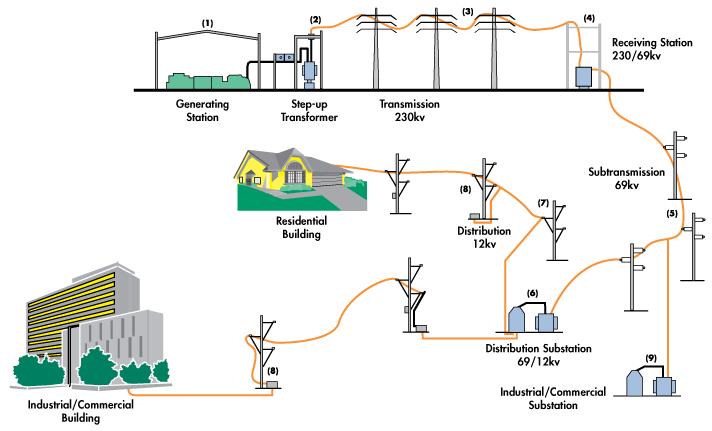
On the supply side, the equation is getting tighter. Several coal and older power plants have been retired, and building new large scale generation or transmission infrastructure takes years. Utilities also have to meet Maryland’s Renewable Portfolio Standard, which requires more clean energy in the mix. While that transition is important, it adds complexity and cost to the system. At the same time, infrastructure and transmission constraints in certain areas can limit how much power can move where it is needed most.
When demand rises faster than supply can be added or delivered, prices tend to increase. Utilities purchase electricity in wholesale markets and pass those costs through to customers. As generation becomes more constrained and compliance requirements tighten, the cost of serving each home can rise.
That is where distributed solar changes the math. When a homeowner produces power on their own roof, they reduce the amount of electricity they need to buy from the utility at the full retail rate. Local solar also reduces strain on transmission lines and helps contribute to the state’s clean energy goals. In a tightening supply environment, generating your own power can provide stability against broader market price increases
Maryland’s Solar Push
Renewable Portfolio Standard (RPS): Historical Context and Evolution
In order to understand why the state is enacting programs to push the adoption of clean energy, we need to understand the RPS, or Renewable Portfolio Standard. This program was first established in 2004 as part of a broader national trend toward diversifying energy generation sources and reducing reliance on fossil fuels. The RPS requires that a growing percentage of the state’s electricity supply come from qualifying renewable energy resources.
Over time, the RPS targets increased incrementally. Early targets were modest and focused on utility-scale renewables. As renewable technologies matured and costs declined, policymakers raised expectations to align with technological feasibility and climate objectives.
In 2022, Maryland adopted one of the most ambitious clean energy goals in the nation:
100% of electricity sold in the state must be derived from zero-emission sources by 2035.
This target reflects multiple market and policy drivers:
- A broader commitment to reduce greenhouse gas emissions in line with state climate plans
- Reduced cost of solar and wind generation technologies
- Greater demand from customers for cleaner energy options
- Regional grid coordination efforts that facilitate clean resource integration
For homeowners, this shift matters because the state’s clean energy goals influence how incentive programs, utility compensation mechanisms, and distributed generation policies evolve. Higher state targets create greater demand for renewable generation capacity at all levels — including distributed, rooftop solar.

- Local Information
Our Vision
Lorem ipsum dolor sit amet consectetur. Lectus nisi condimentum in ipsum volutpat id massa semper. Duis tristique leo convallis sit nunc morbi ut nec cras. Habitant duis id neque cursus egestas. Cras vestibulum amet consequat id suspendisse. Tellus sit elementum nisi tincidunt leo fringilla. Mattis tortor eu et molestie iaculis imperdiet adipiscing.
Vel ut consequat dis quam
Aliquet consequat sed facilisi posuere. Sapien eget gravida mi aenean habitasse sit sagittis vitae. Nullam varius et in ultricies. Felis tincidunt convallis tempor sed id non. Lobortis velit posuere tempus sed eget phasellus viverra proin tincidunt.
Lorem ipsum dolor sit amet consectetur. Lectus nisi condimentum in ipsum volutpat id massa semper. Duis tristique leo convallis sit nunc morbi ut nec cras.